
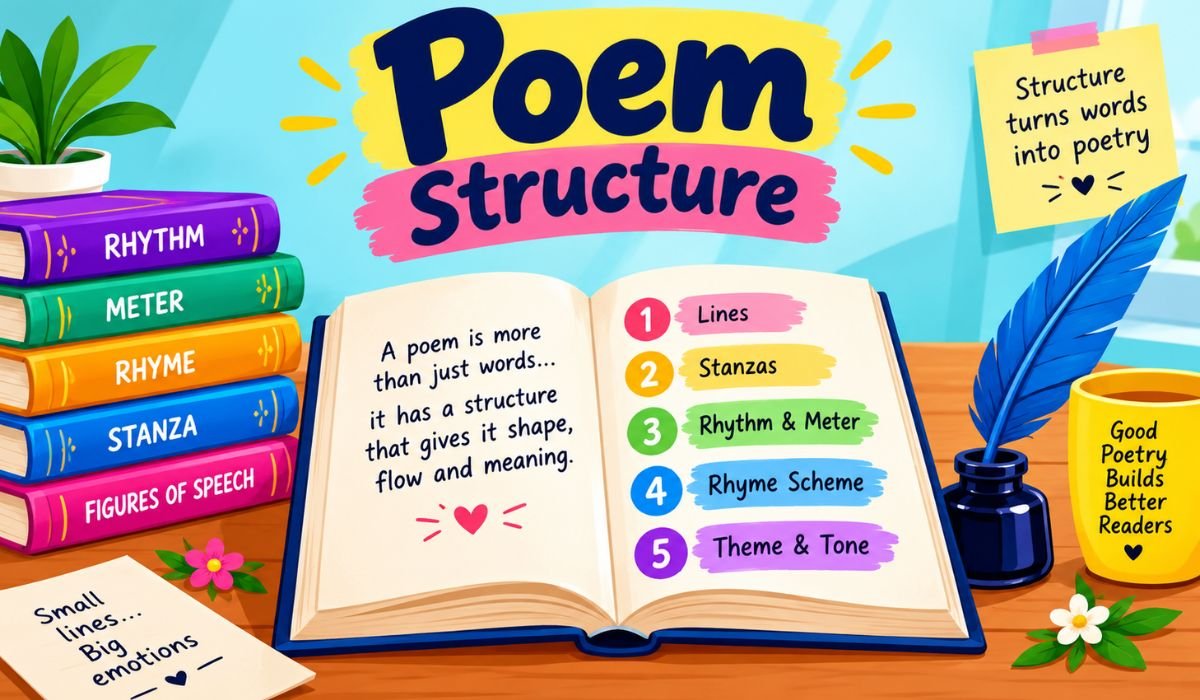
A poem is never just a random collection of lines. Behind every great poem sits a structure, a deliberate arrangement of lines, stanzas, rhyme, and rhythm that shapes how the poem sounds and feels.
Understanding poem structure helps you read poetry with more insight and write poems with more control. In this guide, you will learn what poem structure means, explore its core elements, and see how different poem types such as sonnets, haikus, and villanelles follow their own unique blueprints.
What Is Poem Structure?
Poem structure refers to the organized arrangement of lines, stanzas, rhyme scheme, and meter that gives a poem its shape. It is essentially the skeleton that holds the poem together and guides how a reader moves through it.
Structure can be strict, following fixed rules like a sonnet, or loose, following no formal pattern at all like free verse. Either way, structure influences tone, pacing, and meaning just as much as the words themselves.
Read Also This Blog: Poetry Elements
Why Poem Structure Matters?
Poem structure is not just a technical detail. It plays several important roles.
- Creates rhythm and musicality that make a poem enjoyable to read aloud 🎵
- Guides the reader’s attention from one idea to the next 🧭
- Reinforces the poem’s theme through repetition or contrast 🔁
- Helps poets choose the right form for the right message 🖋️
- Makes poems easier to memorize, perform, or analyze 🎤
Poem Internal Structure Vs Poem External Structure
Poems are generally analyzed through two lenses: internal structure and external structure.
| Structure Type | What It Covers |
|---|---|
| Poem External Structure | The visible shape, including line breaks, stanza count, and overall form |
| Poem Internal Structure | The deeper organization, including syntax, punctuation, enjambment, and logical flow |
Poem External Structure
External structure is what you see on the page, such as the number of stanzas, line length, and overall visual shape of the poem.
Poem Internal Structure
Internal structure focuses on how ideas connect within lines, including sentence structure, pauses, and how thoughts carry from one line to the next.
Core Elements Of Poem Structure
Every poem, whether traditional or modern, relies on a combination of the following structural building blocks.
1. Poem Structure Stanza
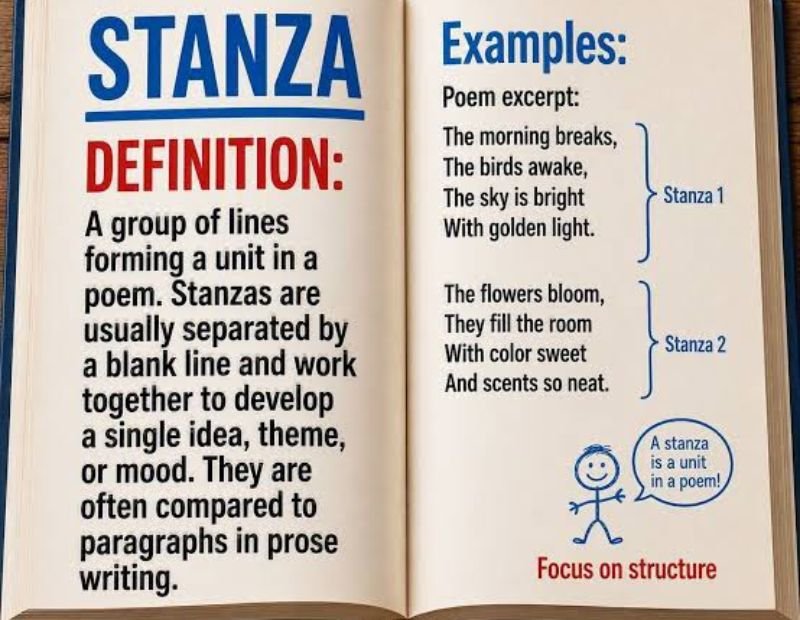
A stanza is a group of lines separated by space, similar to a paragraph in prose. Stanzas can range from two lines to many, and each type has its own name.
| Stanza Type | Number Of Lines |
|---|---|
| Couplet | 2 lines |
| Tercet | 3 lines |
| Quatrain | 4 lines |
| Cinquain | 5 lines |
| Sestet | 6 lines |
| Octave | 8 lines |
2. Poem Structure Rhyme Scheme
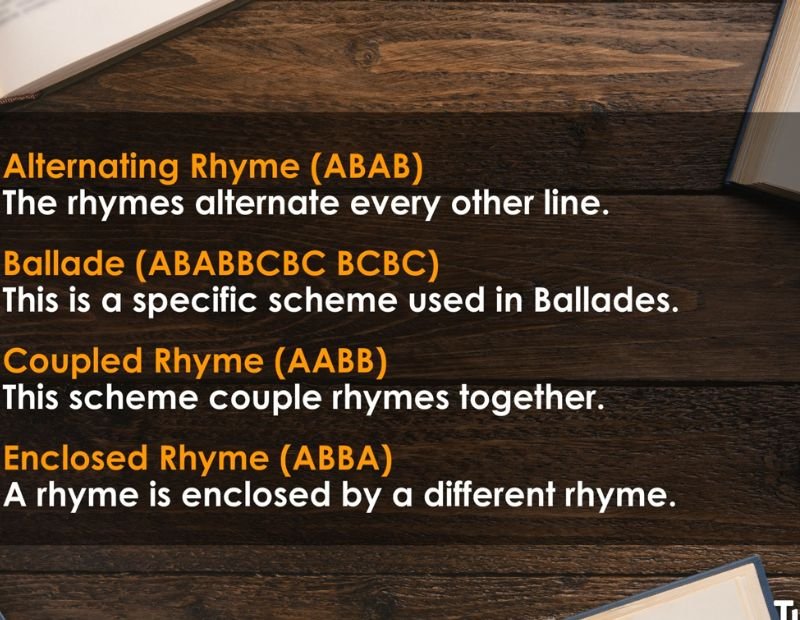
A rhyme scheme is the pattern of rhyming words at the end of each line, usually marked with letters like ABAB or AABB.
- AABB: consecutive lines rhyme in pairs 🔤
- ABAB: alternating lines rhyme with each other 🔤
- ABCB: only the second and fourth lines rhyme 🔤
- AAAA: every line rhymes, known as monorhyme 🔤
3. Poem Structure Syllables
Syllable count controls the rhythm and length of each line. Forms like haiku and cinquain rely heavily on strict syllable patterns rather than rhyme.
4. Meter
Meter is the rhythmic pattern of stressed and unstressed syllables within a line, such as iambic pentameter, which contains five unstressed and stressed syllable pairs per line.
5. Line Breaks And Enjambment
Line breaks determine where one line ends and the next begins. Enjambment happens when a sentence or thought continues past the line break without a pause.
Types Of Poem Structure
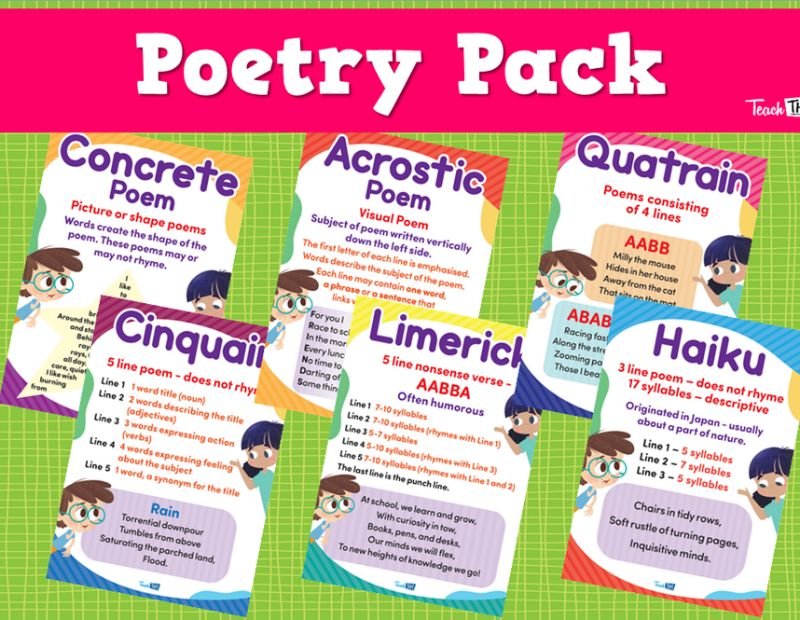
Poetry comes in many structural forms, each with its own set of rules for stanzas, rhyme, and syllables. The table below summarizes the most searched poem structures.
| Poem Type | Structure Summary |
|---|---|
| Sonnet | 14 lines, often ABAB CDCD EFEF GG rhyme scheme |
| Haiku | 3 lines, 5 7 5 syllable pattern, unrhymed |
| Limerick | 5 lines, AABBA rhyme scheme, humorous tone |
| Villanelle | 19 lines, 5 tercets plus a closing quatrain, repeating refrains |
| Ballad | Multiple quatrains, ABCB or ABAB rhyme, narrative style |
| Ode | Formal lyric structure, often three stanza types: strophe, antistrophe, epode |
| Sestina | 6 stanzas of 6 lines, repeating end words in rotating order |
| Cinquain | 5 lines, often following a syllable count pattern |
| Pantoum | Repeating lines across stanzas in an interlocking pattern |
| Diamante | 7 lines forming a diamond shape, based on word type per line |
| Free Verse | No fixed rhyme, meter, or stanza pattern |
| Ghazal | Series of couplets called shers, each capable of standing alone |
Sonnet Poem Structure
A sonnet contains 14 lines, typically written in iambic pentameter, and usually follows a fixed rhyme scheme such as ABAB CDCD EFEF GG in the Shakespearean style.
Haiku Poem Structure
A haiku consists of three unrhymed lines with a 5 7 5 syllable pattern, traditionally focusing on nature or a single vivid moment.
Limerick Poem Structure
A limerick has five lines following an AABBA rhyme scheme, with a bouncy rhythm that suits humorous or lighthearted subjects.
Villanelle Poem Structure
A villanelle is a 19 line poem made up of five tercets and a final quatrain, using two repeating refrains throughout the poem.
Ballad Poem Structure
A ballad tells a story through multiple four line stanzas, often following an ABCB or ABAB rhyme scheme, and was traditionally meant to be sung.
Ode Poem Structure
An ode is a formal lyric poem written to celebrate or honor a person, place, or idea, often structured in three parts known as strophe, antistrophe, and epode.
Sestina Poem Structure
A sestina contains six stanzas of six lines each, reusing the same six end words in a rotating pattern, followed by a shorter closing stanza using all six words again.
Cinquain Poem Structure
A cinquain has five lines, often built around a specific syllable count per line, such as 2 4 6 8 2, to create a compact and focused poem.
Pantoum Poem Structure
A pantoum repeats lines from previous stanzas in a specific interlocking pattern, creating a hypnotic, circular reading experience.
Diamante Poem Structure
A diamante is a seven line poem shaped like a diamond, where each line follows a specific word type, such as nouns, adjectives, or verbs.
Ghazal Poem Structure
A ghazal is composed of couplets called shers, each one complete in meaning, traditionally exploring themes of love, longing, or loss.
Short Poem Structure
Short poems still follow structural rules, just on a smaller scale.
- Haiku: 3 lines, 17 syllables total 🌿
- Cinquain: 5 lines, syllable based pattern 🌸
- Couplet: 2 rhyming lines forming a complete thought 💫
- Tanka: 5 lines, expanding on the haiku format 🍃
Poem Structure Techniques For Writers
Poets use specific techniques to strengthen structure and improve flow.
- Choose a form that matches your message before writing 📌
- Read your poem aloud to check rhythm and pacing 🔊
- Use enjambment intentionally to build tension or surprise ⚡
- Vary stanza length to reflect shifts in tone or emotion 🎭
- Revise line breaks to emphasize key words or images ✨
Poem Structure Ideas To Try
If you want to experiment with structure in your own writing, try these ideas.
- Write a free verse poem focused purely on imagery 🖼️
- Try a haiku capturing a single moment in nature 🍁
- Attempt a villanelle using a refrain about memory 🕰️
- Write a diamante contrasting two opposite ideas 🔷
- Use a pantoum to explore a repeating emotion 🔄
Poem Structure Template And Generator Tools
For beginners, templates and generators can simplify the writing process.
Poem Structure Template
A template provides a blank outline showing stanza breaks, syllable counts, or rhyme scheme placeholders for a specific poem form, making it easier for beginners to follow the rules.
Poem Structure Generator
A poem structure generator is an online tool that automatically creates a blank framework for forms like sonnets, haikus, or villanelles, so writers can focus on word choice rather than counting syllables manually.
Poem Structure PDF
Many teachers and students search for downloadable PDF guides that summarize poem structures, rhyme schemes, and syllable patterns in a simple, printable format for classroom or personal use.
Poem Structure Comparison Table
Here is a side by side comparison of some of the most popular structured poem forms.
| Form | Lines | Rhyme Scheme | Syllable Rule |
|---|---|---|---|
| Sonnet | 14 | ABAB CDCD EFEF GG | 10 per line (iambic pentameter) |
| Haiku | 3 | None | 5 7 5 |
| Limerick | 5 | AABBA | Varies, bouncy rhythm |
| Villanelle | 19 | Repeating refrains | Varies |
| Cinquain | 5 | Often unrhymed | Common pattern like 2 4 6 8 2 |
Frequently Asked Questions
What is the basic structure of a poem?
The basic structure of a poem includes lines grouped into stanzas, often shaped by rhyme scheme, meter, and syllable count.
What are the 4 main parts of a poem?
The four main parts are usually the stanza, line, rhyme scheme, and meter, which together create the poem’s overall shape.
Does every poem need a strict structure?
No, forms like free verse intentionally avoid strict rhyme or meter, relying instead on natural rhythm and imagery.
What is the easiest poem structure for beginners?
Haiku and free verse are often the easiest starting points since they involve fewer strict rules than forms like the sonnet or villanelle.
How is a stanza different from a line?
A line is a single row of text in a poem, while a stanza is a group of lines set apart from other groups by spacing.
What poem structure is best for storytelling?
The ballad is best suited for storytelling since it uses narrative stanzas and a musical rhyme scheme to carry a plot.
Conclusion
Poem structure is the framework that shapes how a poem sounds, flows, and communicates meaning. From the strict fourteen line pattern of a sonnet to the flexible openness of free verse, every structural choice a poet makes influences the reader’s experience.
By understanding stanzas, rhyme schemes, syllables, and the unique rules behind forms like haiku, villanelle, and sestina, you gain the tools to analyze poetry more confidently and write with greater intention. Whether you are a student, teacher, or aspiring poet, mastering poem structure is a skill that will strengthen every piece of poetry you read or create.