
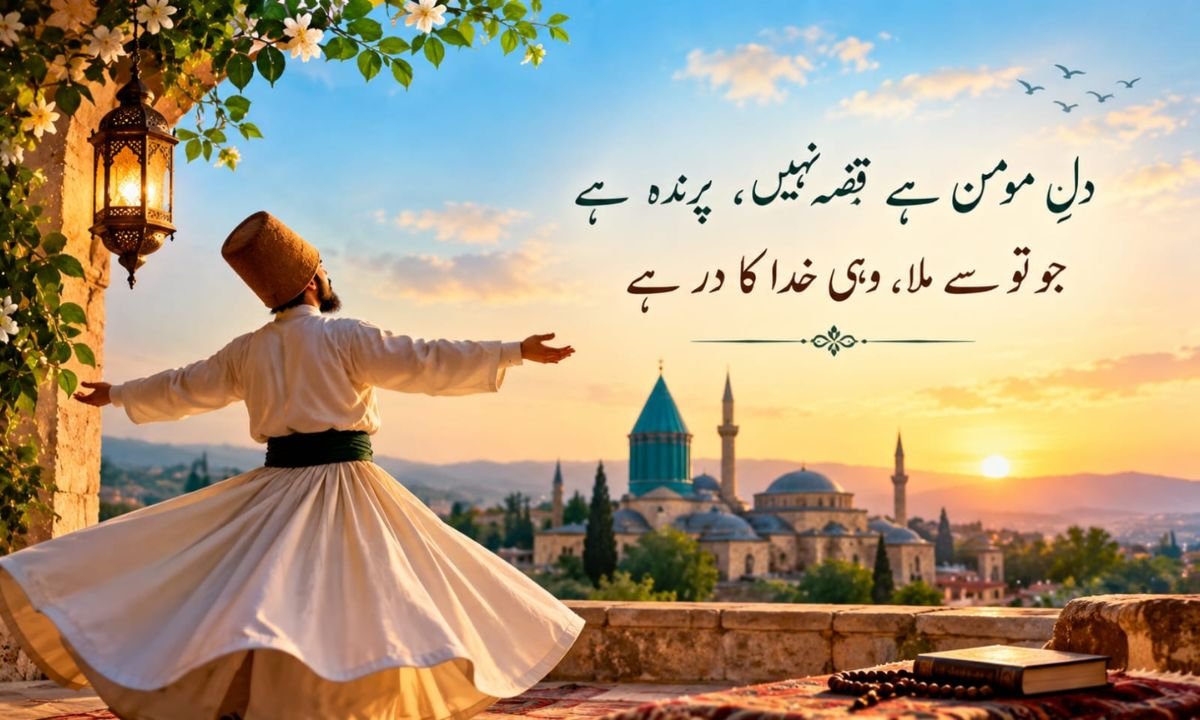
Sufi poetry in Urdu holds a unique place in the world of literature. It is not just poetry written for entertainment, it is poetry written for the soul. Every sher carries a message of divine love, self reflection, and the eternal search for truth. This is why millions of readers across Pakistan, India, and beyond continue to search for sufi shayari, sufiana kalam, and heart touching sufi poetry every single day.
In this detailed guide, we will explore the true meaning of Sufi poetry in Urdu, its rich history, its connection with Punjabi and English traditions, and the legendary poets who shaped this genre, including Bulleh Shah, Rumi, and Allama Iqbal. This article is written in a simple, human, and easy to understand tone so that every reader, whether new to Sufism or a longtime lover of Urdu adab, can benefit from it.
What Does Sufi Poetry In Urdu Actually Mean?
Sufi poetry in Urdu, known as sufi shayari, is a form of mystical poetry rooted in Tasawwuf, the spiritual branch of Islam. Unlike ordinary romantic or social poetry, Sufi poetry uses the language of love, longing, and separation to describe the relationship between the soul and the Creator.
The meaning of Sufi poetry in Urdu becomes clearer once you understand two important concepts:
- Ishq e Majazi, which refers to worldly or human love 💫
- Ishq e Haqiqi, which refers to true and divine love for Allah 🕊️
Sufi poets often begin with the language of human love, then slowly guide the reader toward a deeper spiritual truth. This is what makes Sufi poetry so layered and meaningful, a single verse can be read as a love poem or as a spiritual lesson, depending on the reader’s own journey.
دل میں جب عشقِ حق کی روشنی اترتی ہے
ہر سمت پھر اُس کی ہی جلوہ گری نظر آتی ہے
Dil mein jab ishq-e-Haq ki roshni utarti hai
Har simt phir us ki hi jalwa-gari nazar aati hai
خودی کو مٹا کے جو اُس کے قریب آ گیا
وہی شخص حقیقت میں خود کو نصیب پا گیا
Khudi ko mita ke jo us ke qareeb aa gaya
Wohi shakhs haqeeqat mein khud ko naseeb paa gaya
خاموش دل نے جب اُسے پکارا محبت سے
روح مہک اٹھی اُس کی ایک عنایت سے
Khamosh dil ne jab use pukara mohabbat se
Rooh mehak uthi us ki ek inayat se
The History Of Sufi Poetry In Urdu
Understanding sufi poetry in Urdu history helps readers appreciate how deeply this tradition is woven into South Asian culture. Sufism itself arrived in the subcontinent centuries ago through traveling saints and scholars who used poetry, music, and storytelling to spread messages of peace, tolerance, and unity.
Over time, this spiritual movement blended with local languages such as Punjabi, Sindhi, and Persian before flourishing fully in Urdu. Some key historical points include:
- Early Sufi saints used simple folk language so common people could understand spiritual teachings easily 📿
- Poetry became a preferred medium because it was easy to memorize and pass down through generations 🕯️
- Sufi shrines and gatherings, known as mehfil e sama, helped popularize this poetry through music and recitation 🎵
- Classical Urdu poets later adopted Sufi themes, blending mysticism with formal literary structures like ghazal and nazm 📜
This historical journey explains why Sufi poetry feels both ancient and timeless at the same time.
Read Also This Blog: Nature Poetry
A Quick Timeline Overview
| Era | Development | Influence |
| Early Sufi Period | Oral teachings and folk verses | Regional languages like Punjabi and Sindhi |
| Medieval Period | Rise of Sufi saints and shrines | Spread of mystical poetry across South Asia |
| Classical Urdu Era | Sufi themes enter formal Urdu literature | Poets like Khwaja Mir Dard |
| Modern Era | Sufi poetry blends with philosophy | Poets like Allama Iqbal |
Sufi Poetry In English And Punjabi
While Urdu remains the most popular language for Sufi shayari, this tradition is not limited to one language alone. Sufi poetry in English has grown in popularity through translated works of Rumi and other mystics, allowing global readers to connect with these teachings without needing to understand the original language.
In the silence of my heart, I found Your light,
And lost myself completely in the soul’s flight.
I searched the world for love, but wandered far,
Then found the Divine shining within my heart.
Let every breath become a prayer of grace,
For love reveals the Beloved in every face.
Similarly, sufi poetry in Punjabi holds a very special place, especially because many of the earliest and most influential Sufi poets, including Bulleh Shah, originally composed their kalam in Punjabi rather than Urdu. Over the years, much of this Punjabi Sufi poetry has been translated and adapted into Urdu, allowing it to reach an even wider audience.
دل دے اندر عشق دا دیوا بال کے رکھ
رب نوں لبھنا ایں تے خود نوں بھال کے رکھ۔
مٹی دے وچ رب دا نور وسدا اے
جیہڑا دل صاف رکھے، اوہ رب نوں دسدا اے۔
عشق دی راہ تے کانٹے وی پھُل لگدے
جیہڑے رب دے ہو جاندے، اوہ کدے نئیں تھکدے۔
Here is how the three languages generally differ in tone:
| Language | Common Style | Reader Experience |
| Urdu | Formal, poetic, layered meanings | Deep literary appreciation |
| Punjabi | Folk style, direct, emotional | Raw and heartfelt connection |
| English | Simplified, translated | Accessible to global audiences |
Sufi Quotes In Urdu
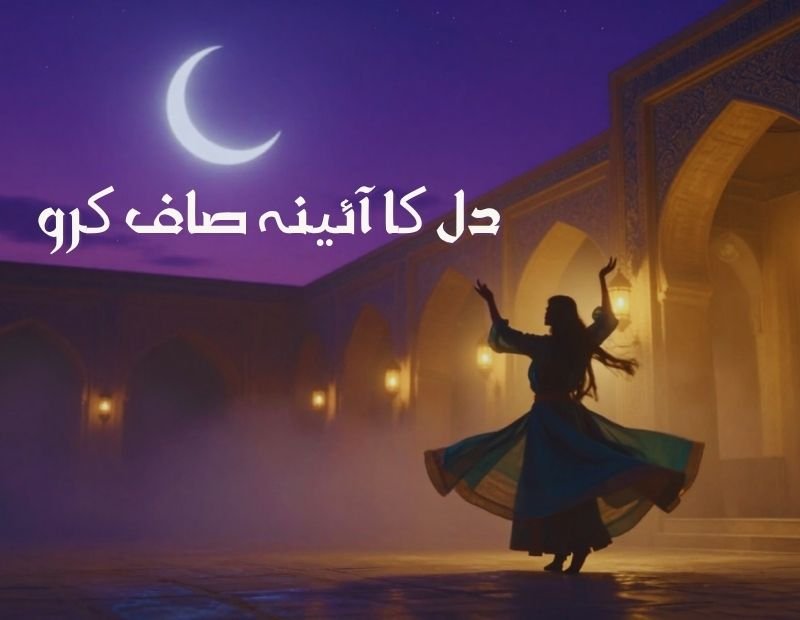
Alongside full length poems, short sufi quotes in Urdu have become extremely popular, especially on social media. These quotes condense deep spiritual wisdom into just one or two lines, making them easy to share and reflect upon. People often use these quotes for:
- Daily spiritual reminders and personal reflection 🌙
- Captions for peaceful or nature themed photography 📷
- Messages shared during difficult emotional moments 💭
- Teaching younger generations about patience and faith 🤲
The short format does not reduce their impact, in fact, it often makes the message even more powerful because every word carries weight.
“دل کو دنیا سے نہیں، اپنے رب سے جوڑو؛ سکون وہیں ملتا ہے جہاں محبتِ الٰہی ہو۔”
“جس دل میں عشقِ حقیقی جاگ جائے، وہاں ہر راستہ منزل بن جاتا ہے۔”
“خاموشی میں اپنے رب کو یاد کرو، کیونکہ روح کی سب سے خوبصورت آواز ذکر ہے۔”
Allama Iqbal Sufi Poetry In Urdu
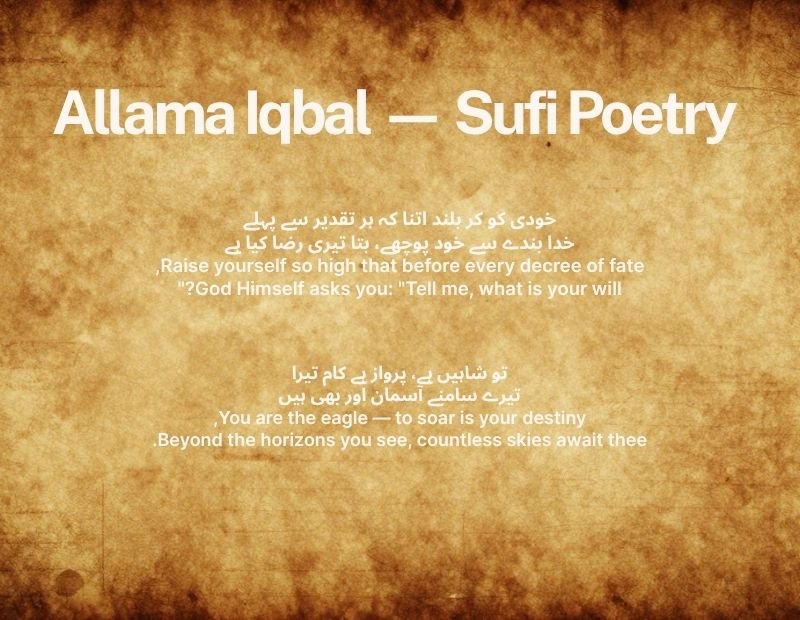
When people think of Allama Iqbal sufi poetry in Urdu, they often recall his powerful philosophical verses that combine spirituality with self awareness and purpose. Iqbal is unique among Sufi influenced poets because his work does not only focus on divine love, it also focuses on human potential and inner strength.
Iqbal often used symbols like the eagle, the stars, and the self, known as khudi, to explain that true spiritual growth comes from realizing one’s own inner strength while staying connected to the divine. This blend of mysticism and motivation is why his work remains widely studied even today.
خودی کو عشقِ حق کی روشنی میں یوں سنوار
کہ تیرے دل میں جاگ اٹھے یقین کا اک بہار۔
Khudi ko Ishq-e-Haq ki roshni mein yun sanwar,
Ke tere dil mein jaag uthe yaqeen ka ek bahaar.
دلِ مومن کو ملتی ہے حقیقت کی نئی پرواز
جب عشقِ الٰہی بن جائے زندگی کا راز۔
Dil-e-Momin ko milti hai haqeeqat ki nai parwaaz,
Jab Ishq-e-Ilahi ban jaye zindagi ka raaz.
خودی کے راز کو پا لے تو منزل دور نہی
چراغِ عشق جل جائے تو دل مجبور نہیں۔
Khudi ke raaz ko pa le to manzil door nahin,
Chiragh-e-Ishq jal jaye to dil majboor nahin.
Sufi Poetry In Urdu By Bulleh Shah
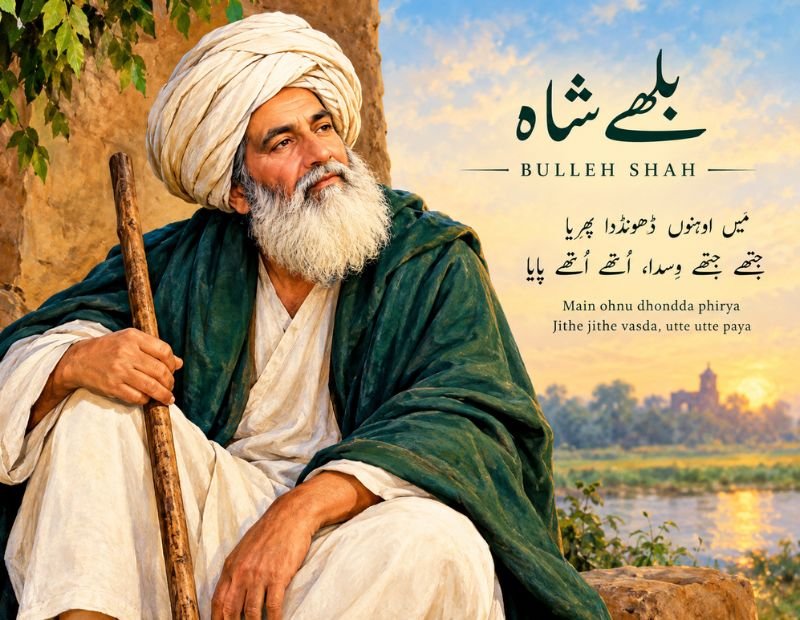
No discussion of sufi shayari is complete without mentioning Bulleh Shah. Sufi poetry in Urdu by Bulleh Shah, originally written in Punjabi, is known for its simplicity, boldness, and deep emotional honesty. Bulleh Shah did not follow rigid religious formalities, instead his poetry focused on:
- The idea that true faith exists within the heart, not in outward rituals 🕋
- Breaking social boundaries created by caste, class, and status 🌾
- Complete devotion to his spiritual teacher and mentor 🙏
- The idea of self discovery as the true path toward the divine 🔥
His work continues to be translated into Urdu and remains a cornerstone of Sufi literature across South Asia.
دل دے اندر رب نوں لبھ، باہر کیوں بھٹکدا اے
اپنے آپ نوں جان لے بندیا، اوتھے نور چمکدا اے
Dil de andar Rab nu labh, bahar kyun bhatkda ae
Apne aap nu jaan le bandeya, utthe noor chamakda ae
عشق دی راہ تے چل کے ویکھ، ہر پردہ اٹھ جانا اے
جس دل اندر پیار وسے، اوہ رب نوں پا جانا اے
Ishq di raah te chal ke vekh, har parda uth jaana ae
Jis dil andar pyaar vase, oh Rab nu paa jaana ae
نہ ذات رہی نہ نام رہا، جد عشق نے دل نوں چھو لیا
میں مٹیا تے رب مل گیا، ہر راز نے خود نوں کھول لیا
Na zaat rahi na naam reha, jad ishq ne dil nu chhoo liya
Main mittiya te Rab mil gaya, har raaz ne khud nu khol liya
Jaun Elai Sufi Poetry
Among modern poets associated with mystical themes, Jaun Elia is often mentioned, though his poetry leans more toward existential and philosophical reflection rather than traditional Sufism. Readers searching for Jaun Elia sufi poetry are usually drawn to his deep introspection, emotional honesty, and his ability to question life, loss, and meaning in a very personal way. While not a classical Sufi poet in the traditional sense, his intense emotional depth often overlaps with themes common in mystical poetry.
دل نے جب خود کو مٹایا، تب حقیقت مل گئی
میں نہ رہا تو مجھ میں تیری ہی محبت مل گئی
خامشی میں ڈھونڈتا رہا میں اُس کو عمر بھر
دل پہ دستک دی تو جانا، وہ تو میرے اندر تھا
جس کو دنیا ڈھونڈتی ہے، وہ سفر کے پار ہے
اپنے دل میں جھانک اے دل، تیرا رب تیرے قریب ہے
Rumi Heart Touching Sufi Poetry In Urdu
Rumi remains one of the most beloved Sufi poets worldwide, and his teachings have been widely translated into Urdu. Rumi heart touching sufi poetry in Urdu focuses heavily on themes such as:
- The pain of separation from the divine beloved 💔
- The idea that love itself is a path to spiritual awakening ❤️🔥
- Letting go of ego to experience true inner peace 🕊️
- Finding beauty and meaning even in suffering 🌹
Rumi’s universal appeal comes from the fact that his teachings, though rooted in Islamic mysticism, speak to basic human emotions that everyone can relate to, regardless of background or belief system.
دل کو جو عشقِ حق کی روشنی مل جائے
پھر ہر اندھیری راہ میں منزل نظر آئے۔
Dil ko jo ishq-e-Haq ki roshni mil jaye,
Phir har andheri raah mein manzil nazar aaye.
خود کو مٹا کے دیکھ، تجھے وہ ملے گا
جس کو زمانہ ڈھونڈتا ہے، وہ تیرے دل میں کھلے گا۔
Khud ko mita ke dekh, tujhe woh milega,
Jis ko zamana dhoondta hai, woh tere dil mein khulega.
عشق وہ دریا ہے جس کا کنارا نہیں
جو اس میں ڈوب گیا، پھر اسے دوبارہ سہارا نہیں۔
Ishq woh darya hai jis ka kinara nahi,
Jo is mein doob gaya, phir use dobara sahara nahi.
Islamic Sufi Poetry In Urdu And Its Core Teachings

Islamic sufi poetry in Urdu is deeply rooted in Quranic values and Islamic teachings, though expressed through metaphor and symbolism rather than direct religious instruction. Some core teachings commonly found in this poetry include:
- The temporary nature of worldly life compared to eternal spiritual truth ⏳
- The importance of humility and letting go of pride 🌾
- Constant remembrance of the Creator through daily actions 📿
- The idea that suffering can lead to spiritual growth when accepted with patience 🌧️
This is why Islamic Sufi poetry is often used not just for literary enjoyment but also for spiritual learning and personal development.
دل میں اللہ کا ذکر ہو، تو ہر غم مٹ جاتا ہے
عشقِ مولا کا نور ہو، تو دل سنور جاتا ہے
Dil mein Allah ka zikr ho, to har gham mit jata hai
Ishq-e-Mola ka noor ho, to dil sanwar jata hai
سجدے میں جو دل جھک جائے، وہی سکون پاتا ہے
رب کی محبت مل جائے، تو ہر راستہ جگمگاتا ہے
Sajde mein jo dil jhuk jaye, wahi sukoon pata hai
Rab ki mohabbat mil jaye, to har rasta jagmagata hai
دنیا کی ہر خوشی فانی، رب کی محبت باقی ہے
جو دل میں رب کو پا لے، اس کی دنیا بھی ساقی ہے
Duniya ki har khushi fani, Rab ki mohabbat baqi hai
Jo dil mein Rab ko pa le, uski duniya bhi saqi hai
Urdu Sufi Poetry In Life
Many readers are drawn to urdu sufi poetry in life because it offers practical wisdom for everyday struggles. Unlike poetry meant purely for entertainment, Sufi verses often serve as gentle life lessons. Common life lessons found in Sufi poetry include:
| Life Lesson | Sufi Perspective |
| Dealing with loss | Loss is temporary, the soul’s journey continues |
| Facing hardship | Struggle purifies the heart and strengthens faith |
| Handling ego | True peace comes from letting go of self importance |
| Finding purpose | Purpose is found through connection with the divine |
This practical wisdom is a major reason why Sufi poetry remains relevant even in modern, fast paced life.
دل کو سکون ملتا ہے جب نام تیرا لیتا ہوں
دنیا سے دور ہو کر خود میں تجھے ہی پاتا ہوں
زندگی کی راہوں میں جو تیرا سہارا مل گیا
ہر غم کے بیچ مجھ کو جینے کا اشارہ مل گیا
میں نے خود کو کھو دیا تیری محبت کے سفر میں
پھر اپنی ہی روح کو پایا تیرے ذکر کے اثر میں
Best And Deep Sufi Poetry In Urdu
When people search for best sufi poetry in Urdu or deep sufi poetry in Urdu, they are usually looking for verses that go beyond surface level emotion and offer real spiritual insight. The best Sufi poetry generally shares a few common qualities:
- Simple language that hides profound meaning underneath 🌊
- A strong emotional core built around love, loss, or longing 💫
- Symbolism drawn from nature, such as the moon, ocean, or desert 🏜️
- A message that encourages reflection rather than quick consumption 🧘
This depth is exactly what separates casual poetry from truly powerful Sufi literature.
دل کے آئینے میں جب اُس کا جلوہ اتر گیا
میں خود کو ڈھونڈتا رہا، اور خود سے گزر گیا
خاموشی میں اُس کا ذکر، سانسوں میں اُس کا نور
جس دل نے اُسے پا لیا، اُس دل کو کیا ہے دور
عشق نے مجھ کو مٹا کر، مجھ کو مجھ سے دور کیا
قطرہ تھا میں، اُس کی رحمت نے مجھے سمندر کیا
Heart Touching And Sad Sufi Poetry In Urdu
Heart touching sufi poetry in Urdu often overlaps with sad sufi poetry in Urdu, since many Sufi verses explore themes of separation, longing, and emotional pain. However, in Sufi tradition, sadness is rarely presented as something negative. Instead, it is often viewed as:
- A necessary stage in the soul’s journey toward the divine 🌒
- A sign of deep love and yearning rather than despair 💌
- An emotion that ultimately leads to spiritual clarity 🌤️
This unique perspective transforms sadness into something meaningful rather than something to avoid, which is part of why this poetry resonates so strongly with readers going through emotional difficulty.
دل کے ویرانے میں تیرا نام جگمگاتا رہا
میں خود سے بچھڑتا گیا، تجھے پاتا رہا
خاموشی میں بھی تیری صدا سنائی دیتی ہے
یہ روح تیری یاد میں ہر پل تنہائی سہتی ہے
عشقِ حق میں جو آنکھ سے آنسو بہہ گئے
وہی قطرے میری روح کے آئینے کو دھو گئے
Sufi Ishaq Poetry In Urdu
The concept of ishq, or intense love, sits at the very center of Sufi philosophy. Sufi ishaq poetry in Urdu explores love not as a fleeting emotion but as a powerful spiritual force capable of transforming the human soul. In this tradition, love is often described through the relationship between:
- The lover and the beloved, symbolizing the soul and the divine 🌹
- The moth and the flame, symbolizing complete surrender 🕯️
- The ocean and the drop, symbolizing unity with something greater 🌊
These metaphors help explain complex spiritual ideas in a way that feels emotionally accessible to everyday readers.
تیرا عشق ملا تو دل کو سکون آ گیا
خود کو بھلایا تو رب کا نور نظر آ گیا
Tera ishq mila to dil ko sukoon aa gaya
Khud ko bhulaya to Rab ka noor nazar aa gaya
دل میں تیری یاد ہو تو ہر غم آسان ہے
عشقِ حقیقی میں ہی روح کا اصل جہان ہے
Dil mein teri yaad ho to har gham aasaan hai
Ishq-e-Haqeeqi mein hi rooh ka asal jahaan hai
عشق نے مجھ کو میری ذات سے آزاد کیا
تیری محبت نے دل کو رب سے آباد کیا
Ishq ne mujh ko meri zaat se azaad kiya
Teri mohabbat ne dil ko Rab se aabaad kiya
Sufiana Poetry And Sufiana Kalam In Urdu
The terms sufiana poetry in Urdu and sufiana kalam poetry in Urdu are often used interchangeably, referring to poetry specifically composed for spiritual reflection and devotional singing. Sufiana kalam is especially significant because it is meant to be recited or sung, often during gatherings known as mehfil e sama, where music and poetry combine to create a deeply meditative experience.
Key characteristics of sufiana kalam include:
- Repetitive and rhythmic structure that supports musical recitation 🎶
- Simple vocabulary designed for emotional and spiritual impact 🕊️
- Themes centered around divine love, unity, and inner peace 🌙
- A strong connection to devotional practices rather than casual reading 📿
This musical and spiritual quality is what makes sufiana kalam feel different from regular written poetry.
دل میں جب عشقِ حقیقی کا دیا جلتا ہے
ہر طرف نور ہی نور نظر آتا ہے
خود کو مٹا کر جو تجھے ڈھونڈنے نکلا
اس نے ہر ذرّے میں تیرا جلوہ دیکھا
نہ دنیا کی طلب ہے، نہ زمانے کا گلہ
تیرا نام لبوں پر ہو، یہی ہے میری دعا
دل کے آئینے میں جب تیرا نور اتر آیا
میں نے خود کو کھو دیا، تو ہی نظر آیا
راستے سارے تری جانب ہی جاتے ہیں
جس کو ڈھونڈا تھا جہاں، وہ دل کے اندر آیا
عشق نے پردے اٹھائے میرے ہر احساس کے
قطرہ تھا میں، تیری رحمت سے سمندر آیا
How To Choose The Right Sufi Poetry For Your Mood?
Since Sufi poetry covers such a wide emotional range, it helps to know what type of verse suits your current state of mind. Use this quick guide:
| Your Current Mood | Recommended Sufi Theme |
| Feeling emotionally low | Sad or heart touching Sufi poetry |
| Seeking motivation | Allama Iqbal’s philosophical verses |
| Wanting peace and calm | Sufiana kalam or Rumi inspired verses |
| Reflecting on life lessons | Urdu Sufi poetry focused on daily life |
This simple approach makes it easier to connect with poetry that truly matches what you are feeling in the moment.
Conclusion
Sufi poetry in Urdu is far more than a literary tradition, it is a spiritual guide that has helped generations of readers make sense of love, loss, faith, and purpose. From the folk wisdom of Bulleh Shah to the philosophical depth of Allama Iqbal and the universal teachings of Rumi, this poetic tradition continues to touch hearts across languages and cultures.
Whether you are drawn to short quotes for daily reflection or deep verses that require quiet contemplation, Sufi poetry offers something meaningful for every stage of life. Its timeless message, that true peace comes from looking within and connecting with the divine, remains just as relevant today as it was centuries ago.
Frequently Asked Questions
What is Sufi poetry in Urdu called?
It is commonly known as sufi shayari or sufiana kalam, referring to mystical poetry rooted in Islamic spirituality.
Who is the most famous Sufi poet in Urdu literature?
Bulleh Shah and Rumi are among the most widely recognized Sufi poets, alongside Allama Iqbal for his philosophical contributions.
What is the difference between Ishq e Majazi and Ishq e Haqiqi?
Ishq e Majazi refers to worldly human love, while Ishq e Haqiqi refers to true divine love for the Creator.
Why is Sufi poetry often associated with sadness?
Sadness in Sufi poetry represents longing and separation from the divine, which is seen as a meaningful spiritual stage rather than despair.
Is Sufi poetry only written in Urdu?
No, Sufi poetry exists in many languages including Punjabi, Persian, Sindhi, and English translations of classical works.
What is sufiana kalam?
Sufiana kalam is devotional Sufi poetry meant for musical recitation, often performed during spiritual gatherings.