
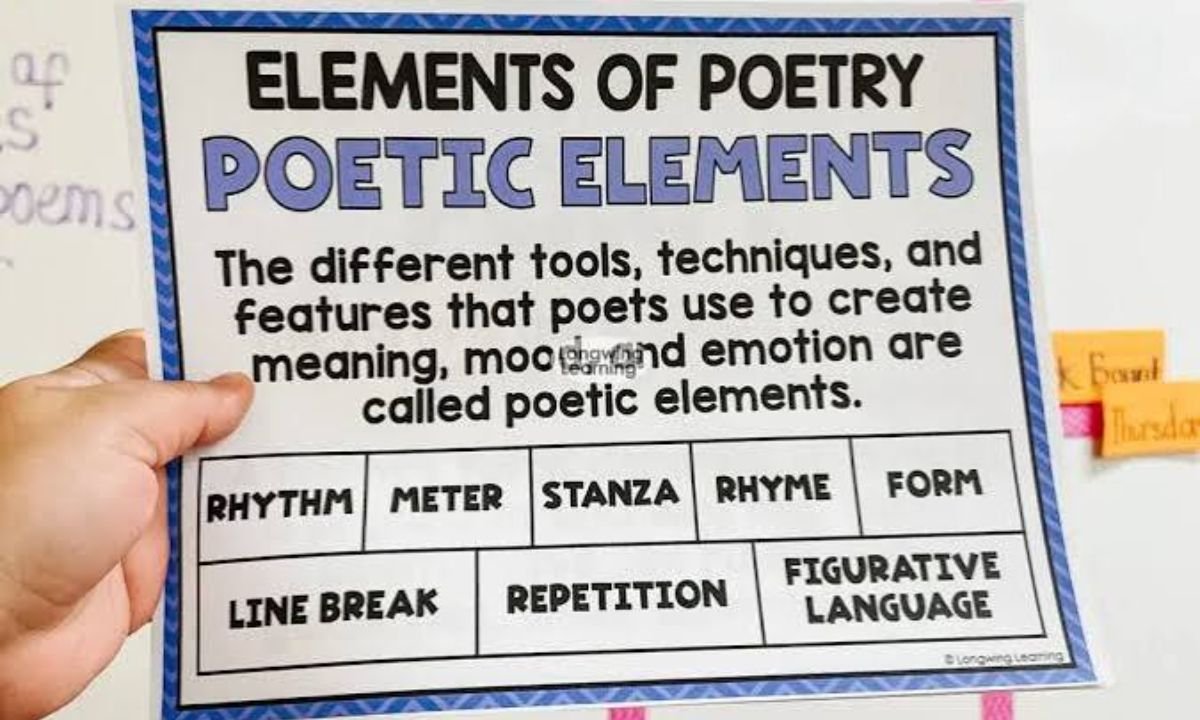
Poetry is more than pretty words arranged on a page. Every strong poem is built from a set of tools that shape sound, meaning, and emotion. These tools are called poetry elements, and once you understand them, reading and writing poetry becomes far more rewarding.
Whether you are a student preparing for an exam, a teacher building an anchor chart, or a poet polishing your craft, this guide breaks down every major poetry element in simple language with clear examples.
What Are The Poetry Elements?
Poetry elements are the building blocks poets use to create rhythm, imagery, and meaning in a poem. They include structural elements like stanza and form, sound elements like rhyme and alliteration, and literary elements like metaphor, symbolism, and tone.
Think of poetry elements as ingredients. A poem can use a few of them or dozens, but each one adds a distinct flavor to the final piece. Understanding these elements helps readers analyze poems more deeply and helps writers craft poems with intention rather than guesswork.
Read Also This Blog: Poetry Terms
Why Learning Poetry Elements Matters?
Knowing these tools benefits both readers and writers in several ways.
- Helps students answer poetry analysis questions confidently 📝
- Improves your ability to write original, structured poems 🖋️
- Builds a shared vocabulary for classroom discussions 🎓
- Strengthens your appreciation of classic and modern poetry 📚
- Makes poetry easier to teach with charts, worksheets, and quizzes ✅
List Of Poetry Elements (Complete Overview)
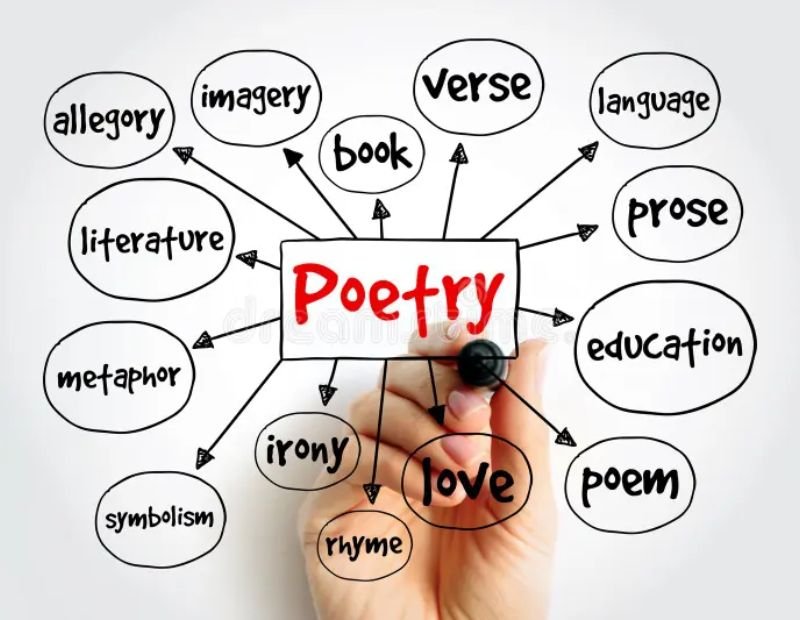
Below is a complete list of poetry elements grouped by category so you can see how they relate to one another.
| Category | Poetry Elements Included |
|---|---|
| Structural Elements | Stanza, line, form, meter, rhyme scheme |
| Sound Devices | Alliteration, assonance, consonance, onomatopoeia, rhythm, repetition |
| Figurative Language | Metaphor, simile, personification, hyperbole, symbolism, imagery |
| Literary Elements | Theme, tone, mood, speaker, diction, syntax |
| Advanced Devices | Allusion, apostrophe, enjambment, irony, conceit, paradox |
This table gives you a quick snapshot before we explore each element in detail.
12 Elements Of Poetry With Meanings
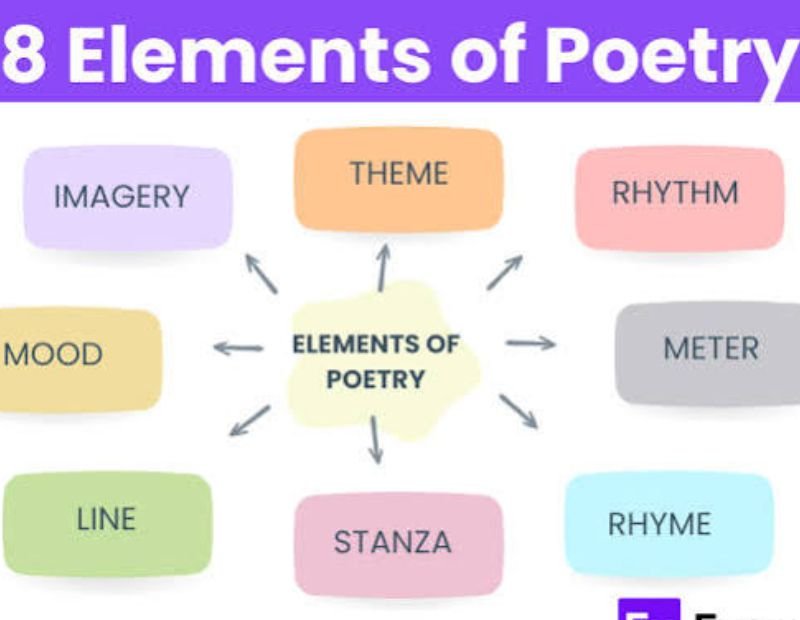
These twelve are the most commonly taught poetry elements in middle school, high school, and college level literature classes.
1. Theme
The theme is the underlying message or central idea of a poem, such as love, loss, nature, or identity.
2. Tone
Tone reflects the poet’s attitude toward the subject, which can be joyful, somber, sarcastic, or reflective.
3. Mood
Mood is the feeling the poem creates in the reader, often shaped by word choice and imagery.
4. Speaker
The speaker is the voice narrating the poem, who may or may not be the poet.
5. Diction
Diction refers to the poet’s word choice, including formal, informal, or archaic language.
6. Syntax
Syntax is the arrangement of words and phrases, which poets often manipulate for effect.
7. Structure
Structure refers to how a poem is organized, including stanzas, line breaks, and overall shape.
8. Form
Form describes the type of poem, such as sonnet, haiku, free verse, or ballad.
9. Rhyme
Rhyme is the repetition of similar sounds, typically at the end of lines.
10. Meter
Meter is the rhythmic pattern of stressed and unstressed syllables in a line.
11. Sound Devices
Sound devices include alliteration, assonance, consonance, and onomatopoeia used to create musicality.
12. Figurative Language
Figurative language includes metaphor, simile, and personification used to compare or describe ideas creatively.
Poetry Elements And Examples
Seeing these elements in action makes them much easier to remember. Here are quick examples for the most popular literary poetry elements.
| Element | Example |
|---|---|
| Simile | Her smile was like sunshine breaking through clouds |
| Metaphor | Time is a thief that steals our moments |
| Alliteration | Peter Piper picked a peck of pickled peppers |
| Personification | The wind whispered secrets through the trees |
| Onomatopoeia | The bees buzzed near the blooming flowers |
| Hyperbole | I have told you a million times already |
| Symbolism | A dove representing peace in a war poem |
| Imagery | Golden leaves drifting across a frost covered field |
Basic Poetry Elements Every Beginner Should Know
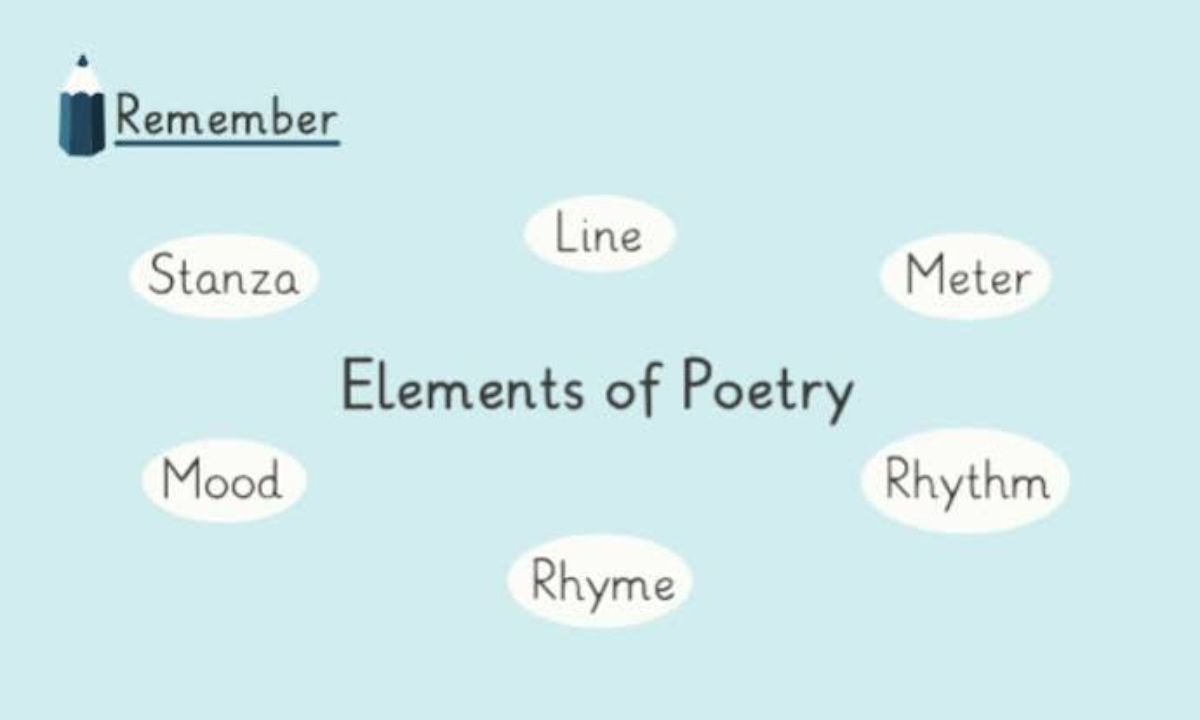
If you are just starting out, focus on mastering these foundational tools first.
- Rhyme: repeated ending sounds that create musicality 🎵
- Rhythm: the beat or flow created by stressed and unstressed syllables 🥁
- Imagery: descriptive language that appeals to the five senses 👁️
- Stanza: a grouped set of lines, similar to a paragraph 📄
- Theme: the central message the poet wants to share 💡
Structural And Formal Elements Of Poetry
Structural and formal elements shape how a poem looks and flows on the page.
Poetry Structural Elements
These include line breaks, stanza length, enjambment, and overall arrangement of the poem.
Poetry Formal Elements
Formal elements refer to the fixed rules a poem follows, such as syllable count in a haiku or rhyme scheme in a sonnet.
Types Of Poetry And Their Unique Elements
Different poetry styles rely on different combinations of elements. Here is how the major forms compare.
| Poetry Type | Defining Elements |
|---|---|
| Narrative Poetry | Plot, characters, setting, conflict, and a clear storyline |
| Epic Poetry | Heroic protagonist, grand setting, divine intervention, elevated language |
| Lyric Poetry | Strong emotion, musical quality, first person voice, personal reflection |
| Prose Poetry | No line breaks, paragraph format, poetic devices within prose structure |
| Metaphysical Poetry | Intellectual wit, extended metaphors called conceits, philosophical themes |
| Spoken Word Poetry | Performance rhythm, repetition, emotional delivery, direct audience address |
Narrative Poetry Elements
Narrative poems tell a story using characters, setting, plot, and conflict, much like a short story told in verse.
Epic Poetry Elements
Epic poetry features a heroic figure, a vast setting, supernatural forces, and formal, elevated language. The Odyssey is a classic example.
Odyssey Epic Poetry Elements And Characteristics
The Odyssey showcases invocation of the muse, in medias res storytelling, epic similes, heroic trials, and divine intervention, all hallmark epic poetry elements.
Lyric Poetry Elements
Lyric poems focus on personal emotion, musicality, and a single speaker expressing inner thoughts or feelings.
Prose Poetry Elements
Prose poetry blends poetic devices like imagery and rhythm with the paragraph structure of prose, skipping traditional line breaks.
Metaphysical Poetry Elements
Metaphysical poetry, popularized by John Donne, uses intellectual arguments, unusual comparisons, and extended conceits to explore love, death, and faith.
Spoken Word Poetry Elements
Spoken word poetry relies on performance, rhythm, repetition, and emotional intensity, often addressing social or personal issues directly.
Literary And Crafts Elements Of Poetry
Literary Poetry Elements
Literary elements include theme, symbolism, tone, and figurative language that give a poem depth and meaning beyond its surface.
Poetry Crafts Elements
Crafts elements focus on the technical skills poets use, such as word choice, line breaks, and pacing, to shape how a poem is experienced.
Poetry Analysis Elements
When analyzing a poem, readers typically examine the following:
- Structure and form of the poem 🔍
- Speaker and point of view 🗣️
- Use of sound devices and rhythm 🎶
- Figurative language and imagery 🌅
- Theme, tone, and mood 🎭
- Historical or cultural context 🌍
Teaching Resources: Anchor Charts, Worksheets, And More
Educators often need ready made tools to teach poetry elements effectively.
Poetry Elements Anchor Chart
An anchor chart is a visual classroom poster listing key elements like rhyme, rhythm, and imagery with simple definitions and examples for quick reference.
Poetry Elements Worksheet
Worksheets typically ask students to identify elements like similes, metaphors, and rhyme schemes within sample poems.
Poetry Elements PDF
Many teachers search for downloadable PDF guides that summarize poetry elements in a printable, classroom ready format.
Poetry Elements PPT
PowerPoint presentations are commonly used to introduce poetry elements visually, often paired with example poems and interactive quizzes.
Poetry Elements Foldable
A foldable is a hands on paper craft where students write each poetry element on a labeled flap, making it a popular interactive teaching activity.
Poetry Elements By Grade Level
Poetry instruction becomes more advanced as students progress through school.
| Grade Level | Focus Areas |
|---|---|
| Poetry Elements 4th Grade | Rhyme, rhythm, simple imagery, and basic stanza structure |
| Poetry Elements 7th Grade | Figurative language, theme, tone, mood, and sound devices |
| High School and Beyond | Meter, syntax, symbolism, allusion, and advanced analysis |
Poetry Elements 4th Grade
Fourth graders typically learn foundational elements like rhyme, rhythm, and simple imagery through fun, engaging poems.
Poetry Elements 7th Grade
Seventh graders build on the basics by exploring figurative language, theme, and tone in more complex poems.
3.03 Quiz Advanced Poetry Elements: What To Expect?
Quizzes labeled with course codes like 3.03 usually test advanced concepts such as meter, syntax, allusion, and figurative language interpretation. To prepare, review definitions carefully, practice identifying devices in unfamiliar poems, and understand how each element contributes to overall meaning.
Frequently Asked Questions
What are the 5 most important elements of poetry?
The five most important elements are theme, imagery, rhyme, rhythm, and figurative language, since they form the foundation of most poems.
How many elements of poetry are there in total?
There is no fixed number, but most educators teach between 12 and 25 core elements, ranging from basic to advanced devices.
What is the difference between poetic devices and poetry elements?
Poetic devices usually refer to specific techniques like metaphor or alliteration, while poetry elements is a broader term covering structure, sound, and meaning together.
What is the easiest poetry element to identify?
Rhyme is generally the easiest element to spot because it involves matching sounds at the end of lines.
Why is imagery considered a key poetry element?
Imagery helps readers visualize and emotionally connect with a poem by appealing to the five senses.
What poetry element is most common in spoken word poetry?
Repetition and rhythm are the most common elements in spoken word poetry, since they drive performance and emotional impact.
Conclusion
Poetry elements are the toolkit that transforms simple words into powerful art. From basic tools like rhyme and rhythm to advanced techniques like conceit and allusion, each element plays a role in shaping how a poem sounds, feels, and means something to its reader.
Whether you are analyzing a classic epic, writing a lyric poem, or preparing an anchor chart for your classroom, understanding these 25 plus elements gives you the confidence to read, write, and teach poetry with clarity. Start by mastering the basics, then gradually explore the more advanced literary tools as your skills grow.